
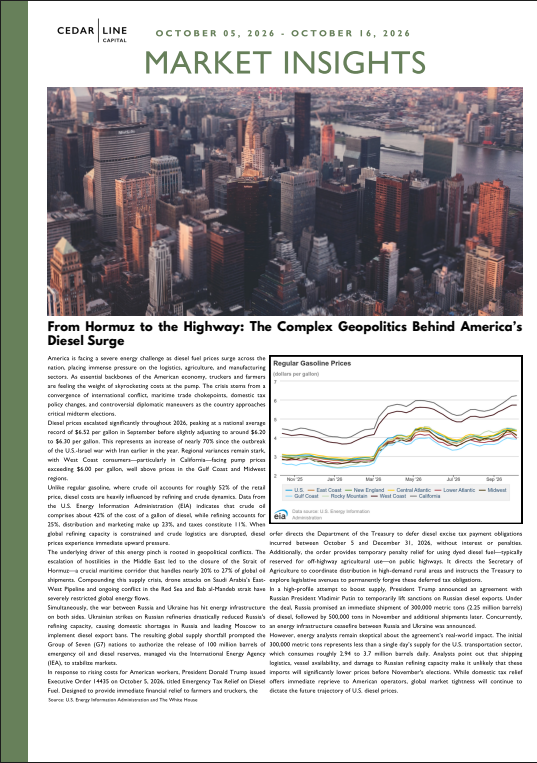
From Hormuz to the Highway: The Complex Geopolitics Behind America’s Diesel Surge
U.S. diesel prices have surged amid geopolitical conflict, disrupted shipping routes, and constraints on global refining capacity, putting mounting pressure on truckers, farmers, and manufacturers. The article examines whether emergency tax relief and a proposed resumption of Russian diesel shipments can provide meaningful relief, or whether persistent supply constraints will continue to shape prices as the November midterm elections approach.
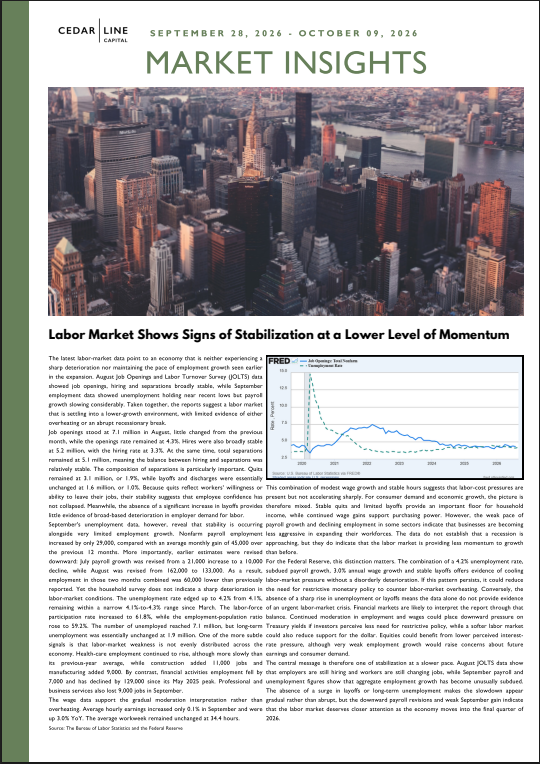
Labor Market Shows Signs of Stabilization at a Lower Level of Momentum
The latest U.S. labor-market data point to a gradual moderation rather than an abrupt deterioration, with August JOLTS data showing broadly stable hiring and separations while September payroll growth slowed sharply. The combination of subdued employment growth, a 4.2% unemployment rate, stable layoffs, and moderate wage gains provides an important signal for consumer demand, Federal Reserve policy, and financial markets.
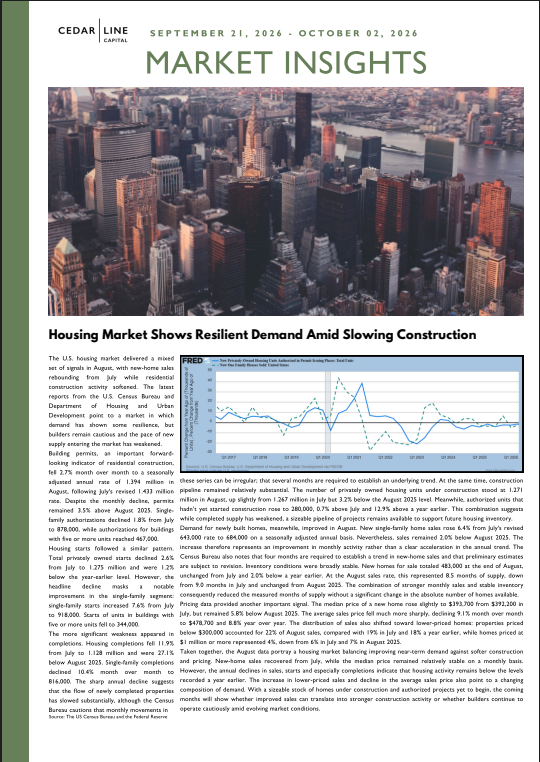
Housing Market Shows Resilient Demand Amid Slowing Construction
The U.S. housing market delivered mixed signals in August, as new-home sales rebounded while permits, total housing starts, and completions weakened. The latest data point to resilient near-term demand alongside softer construction activity and a sizable pipeline of homes still under construction or awaiting a start.
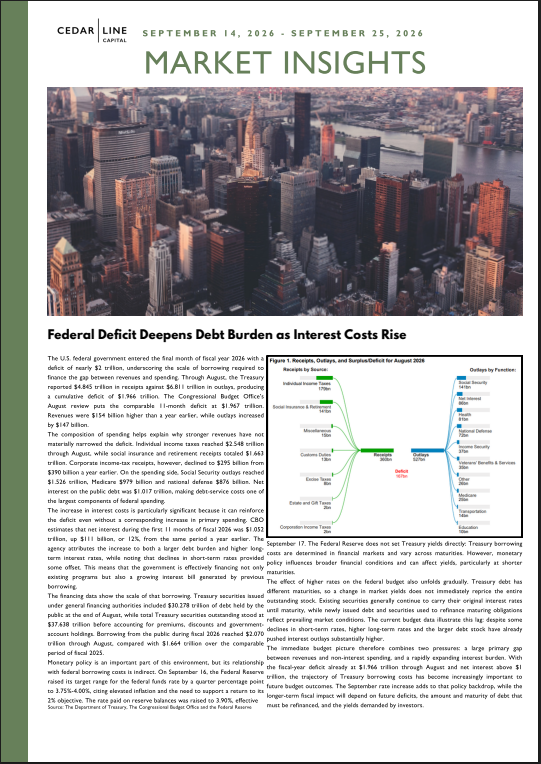
Federal Deficit Deepens Debt Burden as Interest Costs Rise
The U.S. federal deficit reached nearly $2 trillion through August 2026, while net interest costs climbed above $1 trillion as the government faced a larger debt burden and elevated borrowing costs. The article examines the composition of federal receipts and spending and considers how fiscal pressures interact with the Federal Reserve's monetary policy and interest-rate environment.
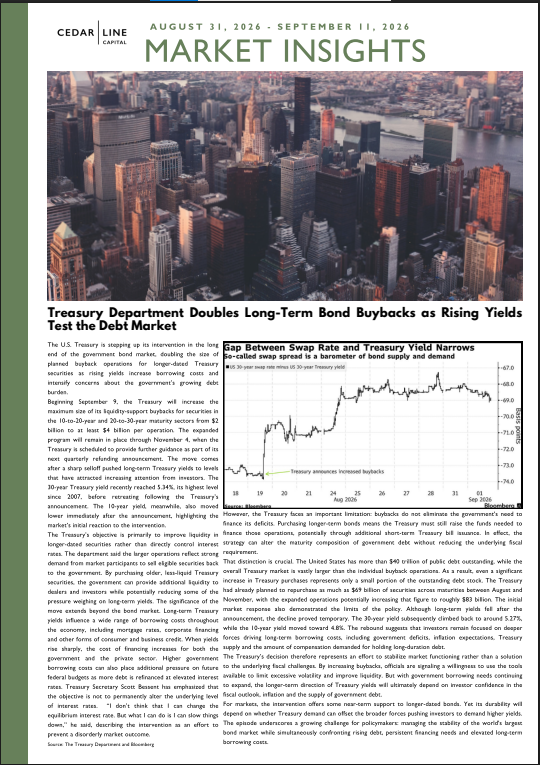
Treasury Department Doubles Long-Term Bond Buybacks as Rising Yields Test the Debt Market
The U.S. Treasury is doubling planned buyback operations for longer-dated Treasury securities as elevated yields and rising government borrowing costs place renewed pressure on the long end of the bond market. While the expanded program is intended to improve liquidity and reduce disorderly market conditions, persistent deficits, Treasury supply, inflation expectations, and investor demand for long-duration debt continue to shape the outlook for long-term yields.
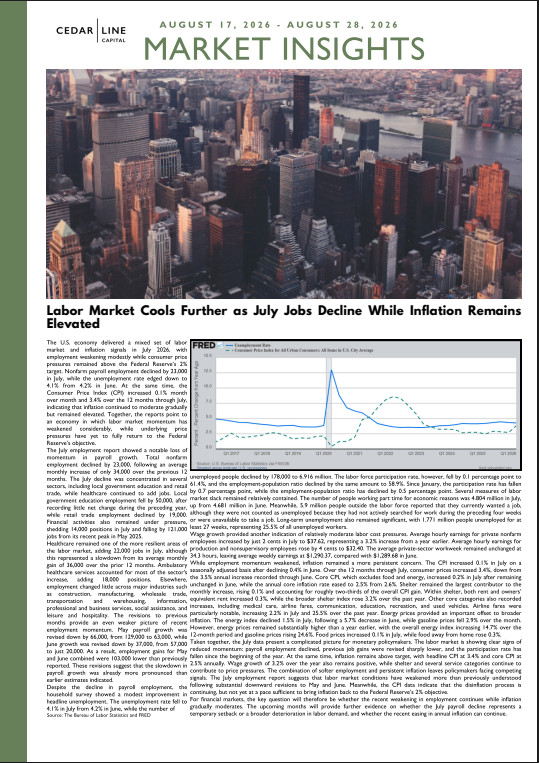
Labor Market Cools Further as July Jobs Decline While Inflation Remains Elevated
The July 2026 U.S. economic data point to a growing divergence between a cooling labor market and inflation that remains above the Federal Reserve’s target. While payroll employment declined and previous job gains were revised lower, consumer prices continued to rise, leaving policymakers to balance weakening employment conditions against persistent underlying price pressures.
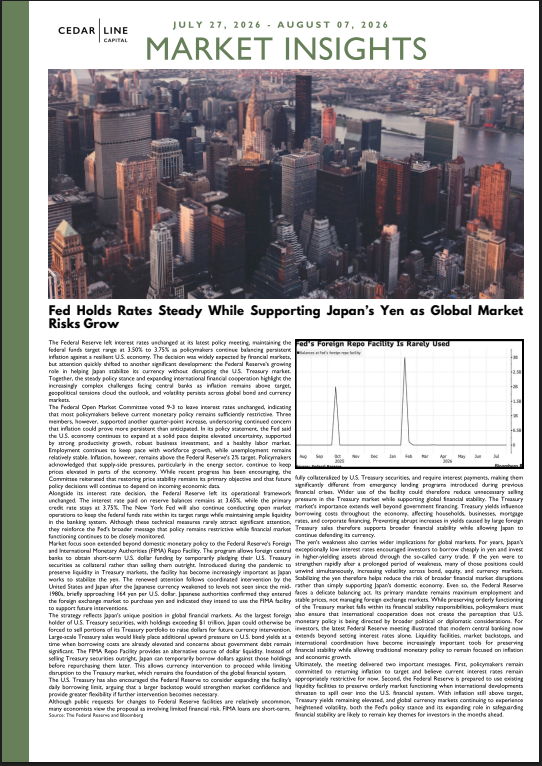
Fed Holds Rates Steady While Supporting Japan’s Yen as Global Market Risks Grow
The Federal Reserve held interest rates steady as policymakers continued to balance persistent inflation against a resilient U.S. economy. At the same time, the growing use of the FIMA Repo Facility could help Japan stabilize the yen while limiting potential disruption to the U.S. Treasury market, highlighting the expanding role of liquidity tools and international coordination in safeguarding global financial stability.
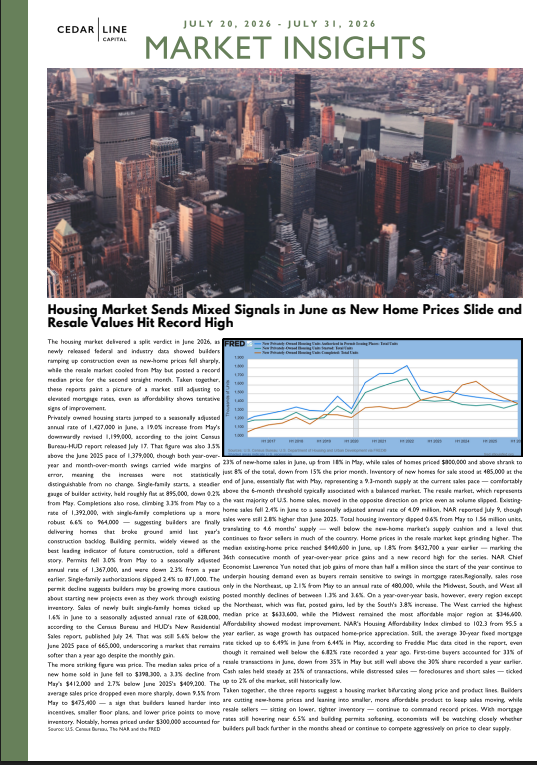
Housing Market Sends Mixed Signals in June as New Home Prices Slide and Resale Values Hit Record High
The housing market showed increasing signs of divergence in June 2026, with builders boosting construction activity while cutting new-home prices to attract increasingly rate-sensitive buyers. At the same time, limited resale inventory continued to support record-high existing-home prices, highlighting a market adjusting unevenly to elevated mortgage rates and affordability pressures.
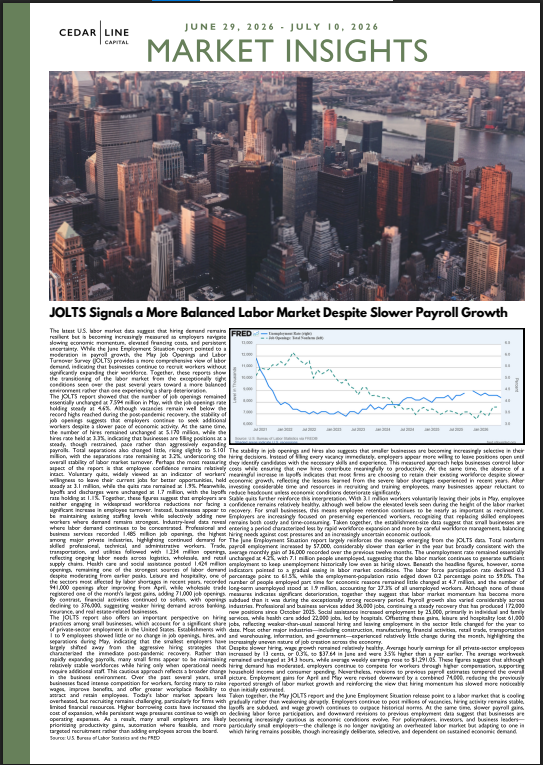
JOLTS Signals a More Balanced Labor Market Despite Slower Payroll Growth
Steady job openings and subdued layoffs point to a U.S. labor market that remains fundamentally resilient, even as hiring momentum slows. Combined with weaker payroll growth and more cautious recruitment among small businesses, the latest data indicate a gradual rebalancing of labor market conditions.
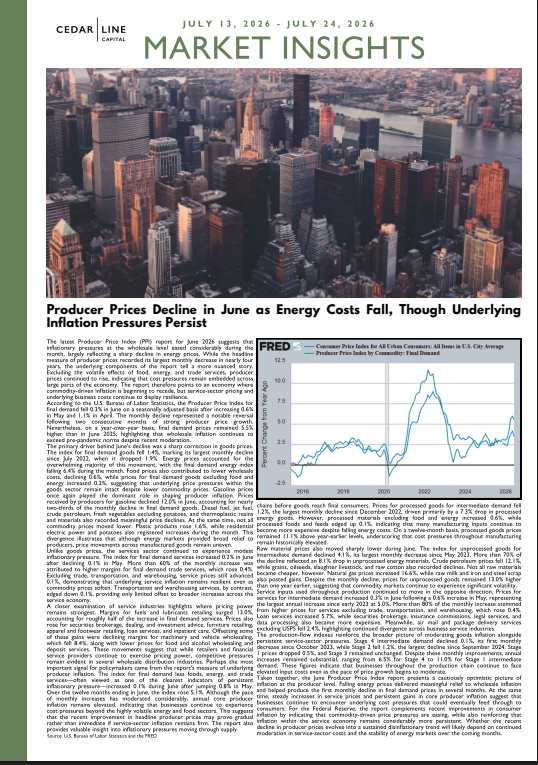
Producer Prices Decline in June as Energy Costs Fall, Though Underlying Inflation Pressures Persist
U.S. producer prices declined in June 2026 as a sharp drop in energy costs drove the largest monthly decrease in wholesale inflation since mid-2022. While lower commodity prices eased headline inflation, persistent increases in core producer prices and service-sector costs suggest that underlying inflationary pressures remain a challenge for businesses and policymakers.
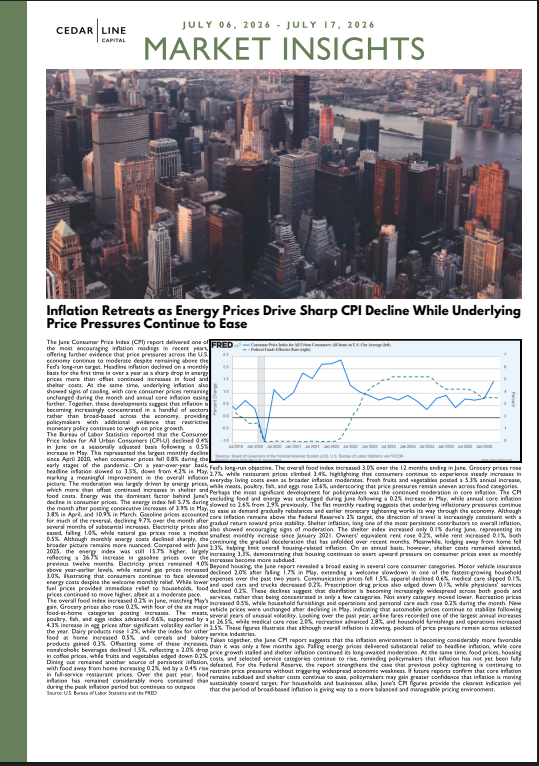
Inflation Retreats as Energy Prices Drive Sharp CPI Decline While Underlying Price Pressures Continue to Ease
U.S. inflation eased markedly in June 2026 as a sharp decline in energy prices pushed headline consumer prices lower for the first time in more than a year. While underlying inflation continued to moderate and shelter costs showed further signs of cooling, persistent increases in food and selected service categories suggest the path back to the Federal Reserve's inflation target remains gradual.
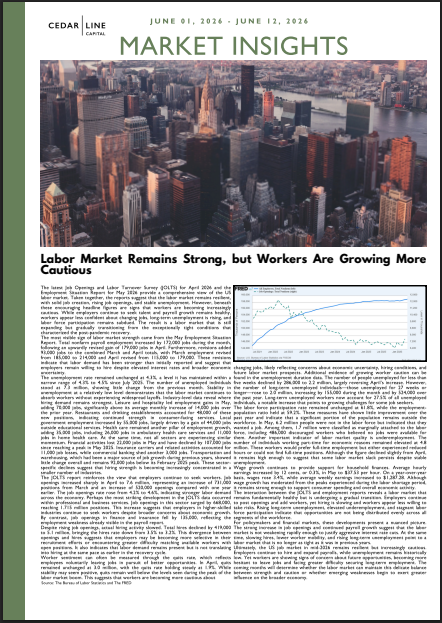
Labor Market Remains Strong, but Workers Are Growing More Cautious
The latest US labor market reports reveal an economy that continues to generate jobs, but with growing signs of underlying weakness. While payroll growth, hiring activity, and wage gains remain positive, rising underemployment, slowing participation, and sector-specific declines suggest that labor market momentum is gradually cooling. This article analyzes the latest data from the BLS, ADP, and JOLTS reports to examine how employment trends are shaping the broader economic outlook and influencing Federal Reserve policy expectations.
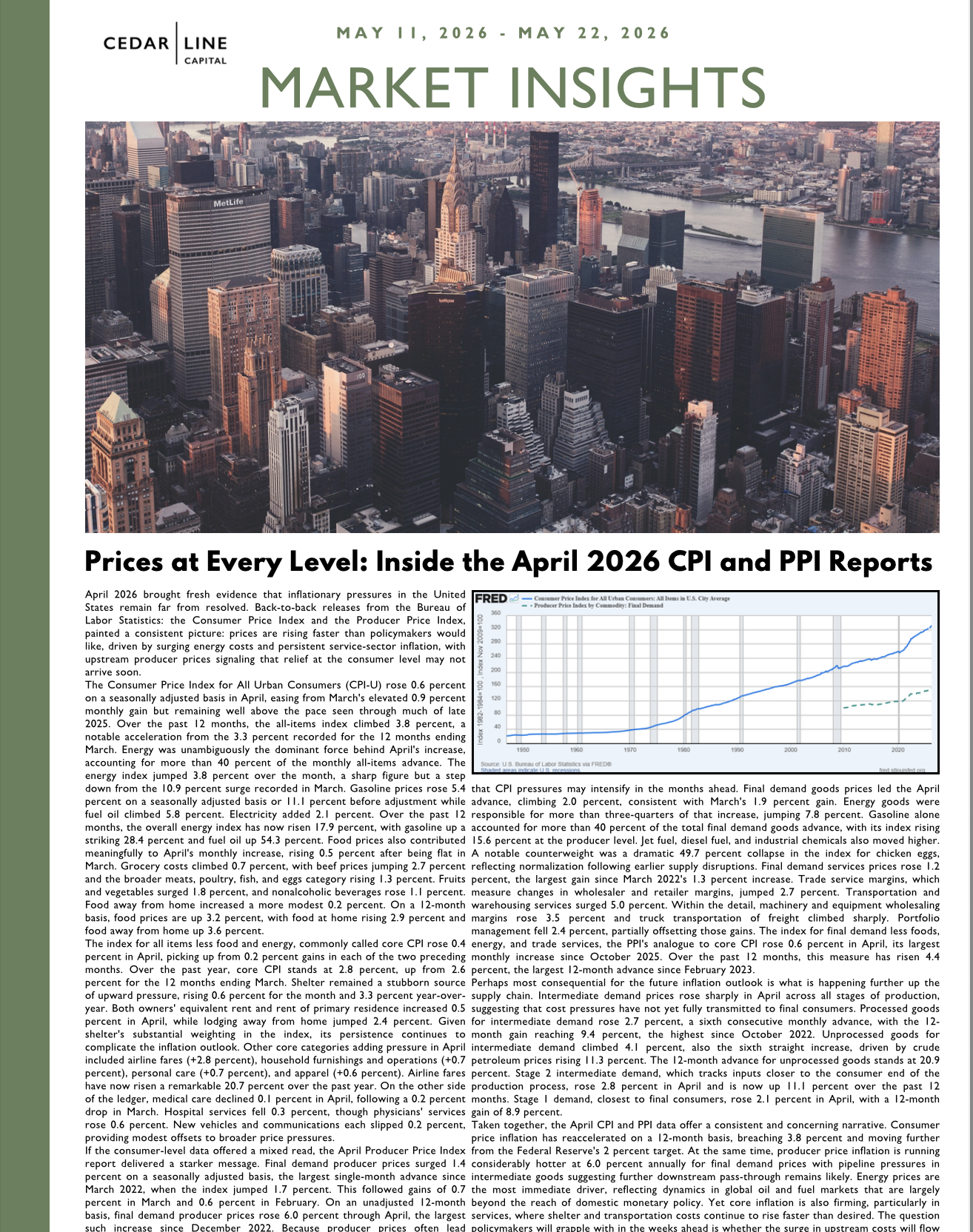
Prices at Every Level: Inside the April 2026 CPI and PPI Reports
The latest US labor market reports reveal an economy that continues to generate jobs, but with growing signs of underlying weakness. While payroll growth, hiring activity, and wage gains remain positive, rising underemployment, slowing participation, and sector-specific declines suggest that labor market momentum is gradually cooling. This article analyzes the latest data from the BLS, ADP, and JOLTS reports to examine how employment trends are shaping the broader economic outlook and influencing Federal Reserve policy expectations.
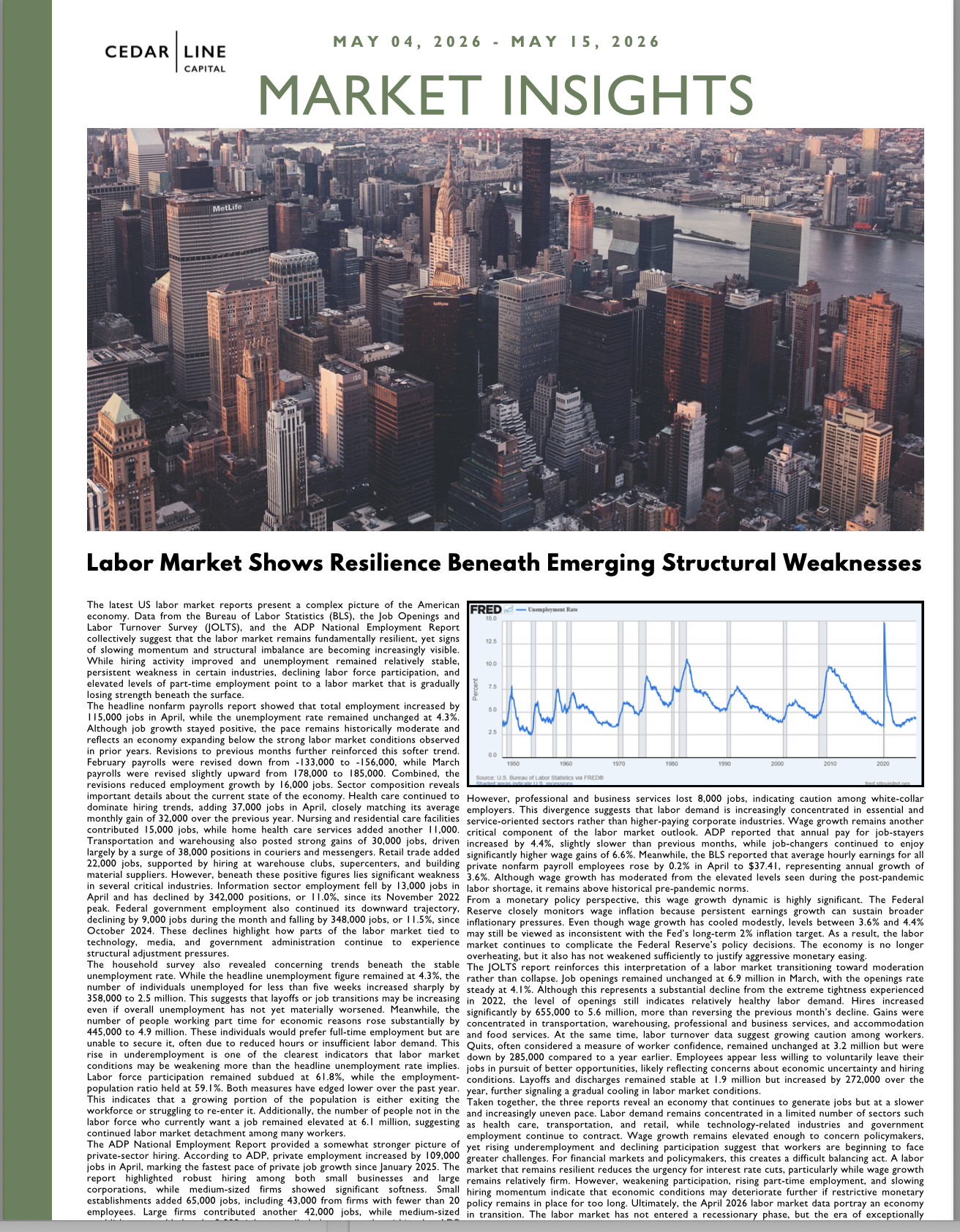
Labor Market Signals Resilience Amid Emerging Economic Pressures
The latest US labor market reports reveal an economy that continues to generate jobs, but with growing signs of underlying weakness. While payroll growth, hiring activity, and wage gains remain positive, rising underemployment, slowing participation, and sector-specific declines suggest that labor market momentum is gradually cooling. This article analyzes the latest data from the BLS, ADP, and JOLTS reports to examine how employment trends are shaping the broader economic outlook and influencing Federal Reserve policy expectations.
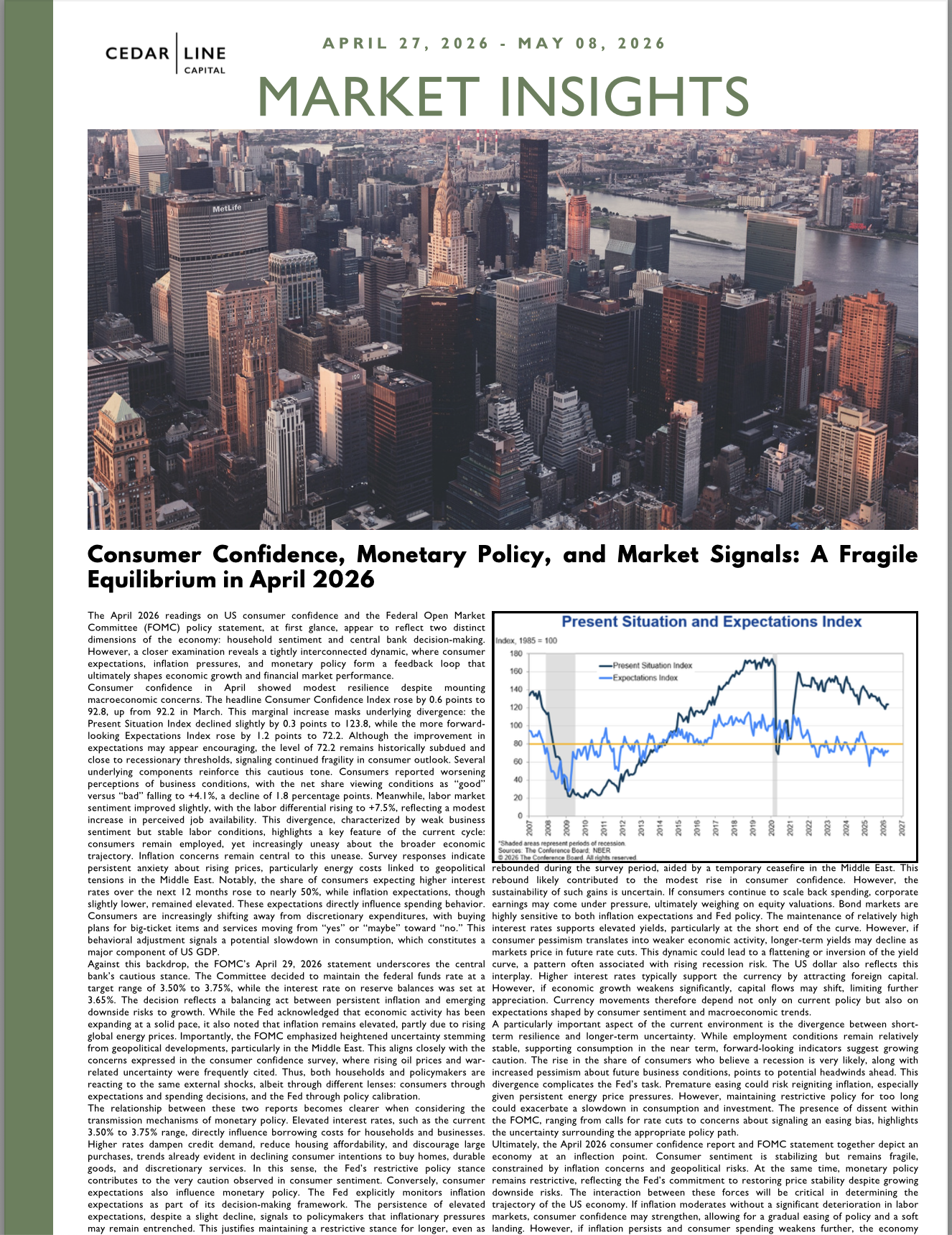
Consumer Confidence vs. Fed Policy: What April 2026 Signals for Markets
March inflation data show a sharp rise in headline consumer prices, driven primarily by a surge in energy costs, while underlying inflation remains relatively contained. At the same time, producer price data point to sustained upstream cost pressures that could gradually feed into consumer prices in the coming months. The divergence between stable core inflation and elevated producer costs highlights an increasingly complex inflation environment. This analysis explores the implications for monetary policy, inflation expectations, and financial markets.
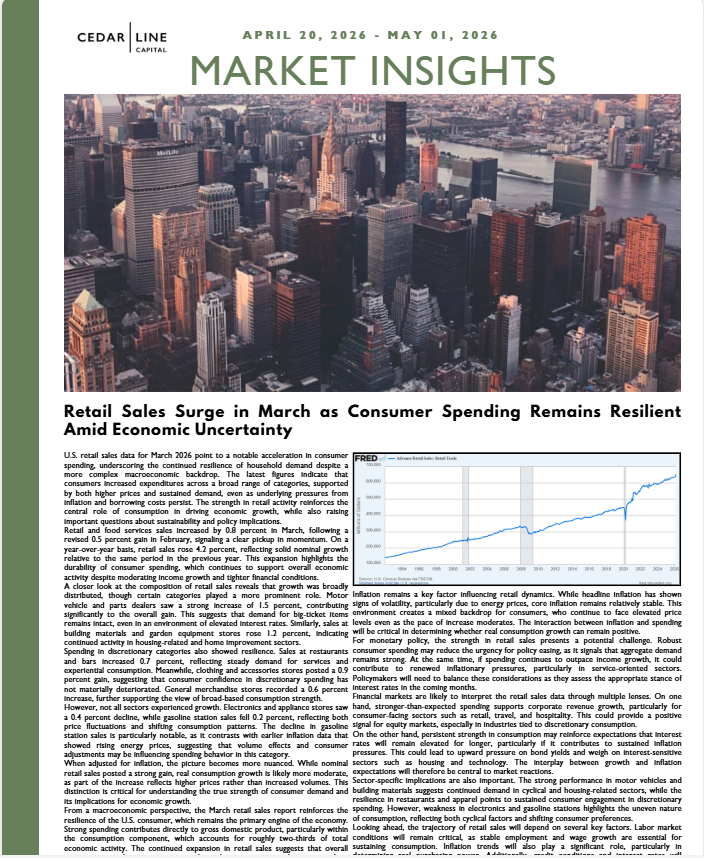
Retail Sales Surge in March as Consumer Spending Remains Resilient Amid Economic Uncertainty
March inflation data show a sharp rise in headline consumer prices, driven primarily by a surge in energy costs, while underlying inflation remains relatively contained. At the same time, producer price data point to sustained upstream cost pressures that could gradually feed into consumer prices in the coming months. The divergence between stable core inflation and elevated producer costs highlights an increasingly complex inflation environment. This analysis explores the implications for monetary policy, inflation expectations, and financial markets.
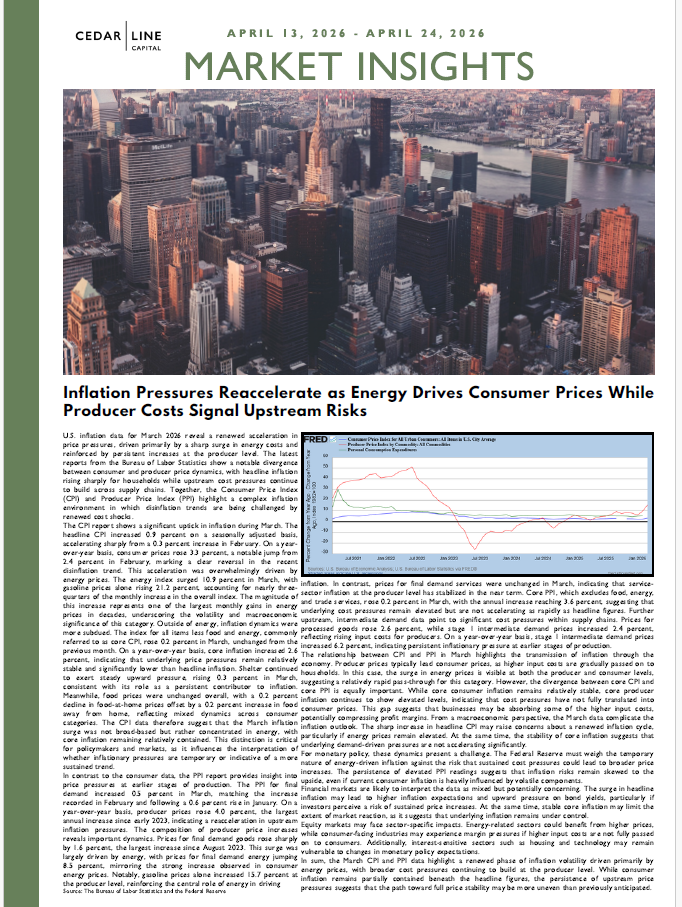
Energy-Driven Inflation Surge Masks Persistent Upstream Price Pressures in March
March inflation data show a sharp rise in headline consumer prices, driven primarily by a surge in energy costs, while underlying inflation remains relatively contained. At the same time, producer price data point to sustained upstream cost pressures that could gradually feed into consumer prices in the coming months. The divergence between stable core inflation and elevated producer costs highlights an increasingly complex inflation environment. This analysis explores the implications for monetary policy, inflation expectations, and financial markets.
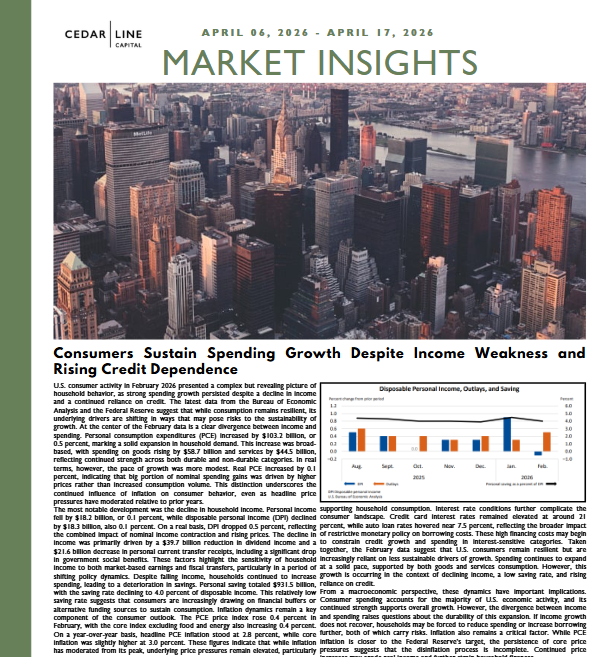
U.S. Consumer Spending Holds Firm Despite Income Declines and Rising Credit Dependence
February data show U.S. consumers continuing to support economic growth through steady spending, even as personal income declined and savings rates fell. The divergence between income and consumption highlights increasing reliance on credit and financial buffers to sustain demand. While inflation has moderated, persistent price pressures and elevated borrowing costs are beginning to weigh on household balance sheets. This analysis examines the sustainability of consumer-driven growth and its implications for monetary policy and financial markets.
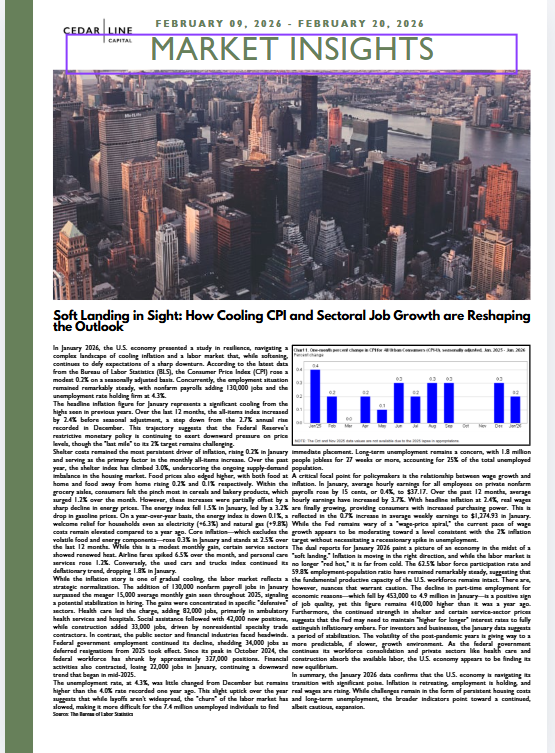
Soft Landing in Sight: How Cooling CPI and Sectoral Job Growth are Reshaping the Outlook
The U.S. economy continues to navigate a delicate transition toward a "soft landing," characterized by a strategic moderation in headline inflation to 2.4% and a resilient, albeit normalizing, labor market. While persistent shelter costs remain a focal point for the Federal Reserve, the addition of 130,000 nonfarm payrolls suggests that the domestic engine is finding a sustainable equilibrium rather than a downturn. Our latest report provides a comprehensive examination of these shifting macroeconomic indicators and their implications for the 2026 fiscal outlook.
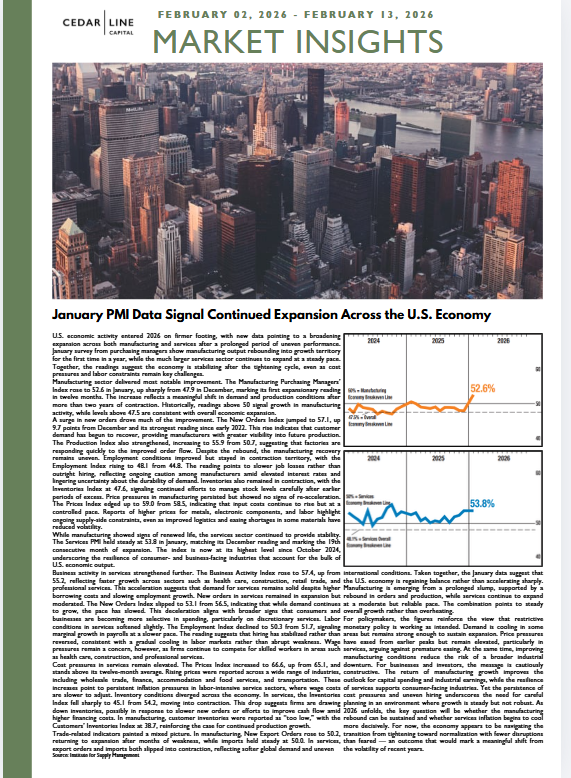
January PMI Data Signal Continued Expansion Across the U.S. Economy
U.S. economic momentum improved at the start of 2026, as January PMI data showed manufacturing returning to expansion while services activity remained firmly in growth territory. A rebound in new orders and production points to strengthening demand conditions, even as employment and cost pressures show signs of moderation. Together, the surveys suggest the economy is stabilizing rather than overheating, supporting expectations for steady growth under still-restrictive financial conditions.