
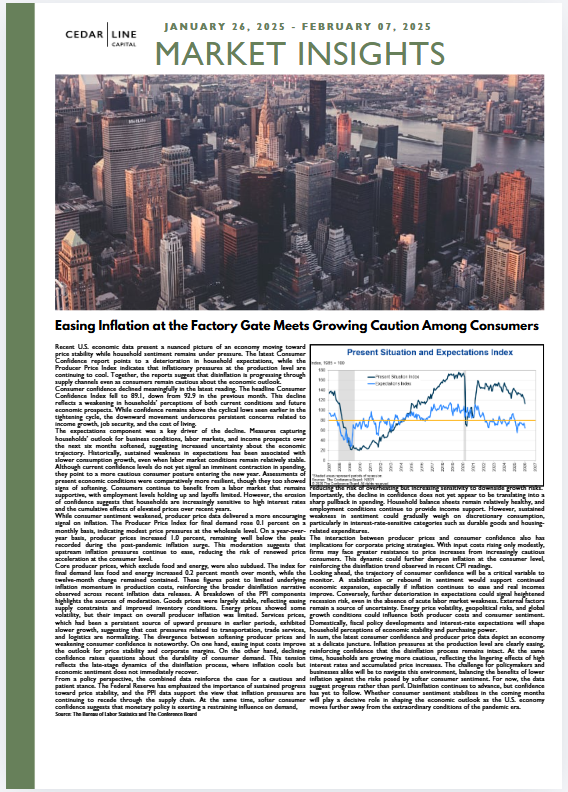
Easing Inflation at the Factory Gate Meets Growing Caution Among Consumers
The latest U.S. data show producer price pressures continuing to ease, reinforcing progress in the broader disinflation process. At the same time, consumer confidence has declined, reflecting growing caution among households despite a resilient labor market. This divergence highlights the late-stage dynamics of monetary tightening, where inflation cools faster than sentiment recovers. Our analysis explores what these trends mean for demand, pricing power, and the economic outlook.
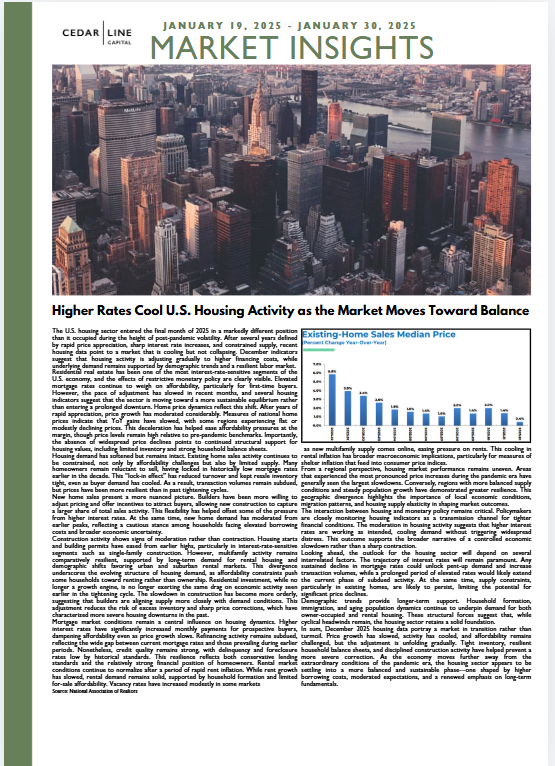
Higher Rates Cool U.S. Housing Activity as the Market Moves Toward Balance
The U.S. housing market is finally finding its footing. While higher interest rates have taken some of the heat out of demand, they haven’t sparked the kind of sharp correction many feared. December’s numbers tell a story of cooler, but more balanced, conditions: slower price gains, softer sales volumes, and a gradual reset between buyers and sellers. Limited inventory and generally healthy household finances are keeping a floor under prices, even as affordability remains a challenge. In our latest report, we break down what this shifting landscape means for housing activity and the broader economic outlook as we head into 2026.
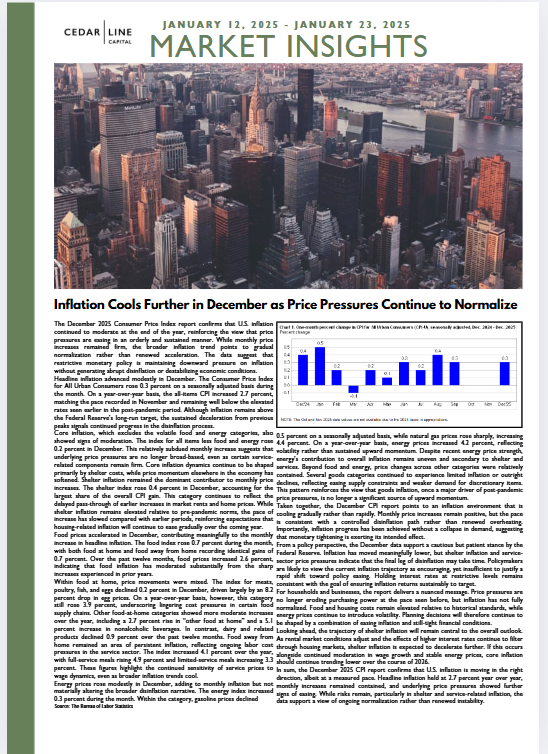
Inflation Cools Further in December as Price Pressures Continue to Normalize
The December CPI report confirms that U.S. inflation is cooling in a steady, well-managed fashion. Headline inflation is holding at 2.7% year over year, and the underlying price pressures that worried markets earlier in the cycle continue to ease. While shelter and other services remain relatively expensive, price growth for goods has slowed meaningfully and month‑to‑month increases are staying in check. Taken together, these trends point to a Federal Reserve policy stance that is successfully cooling the economy without knocking demand off course. In our latest note, we break down the main forces shaping December’s inflation data and what they could mean for the next phase of the inflation and interest rate story.
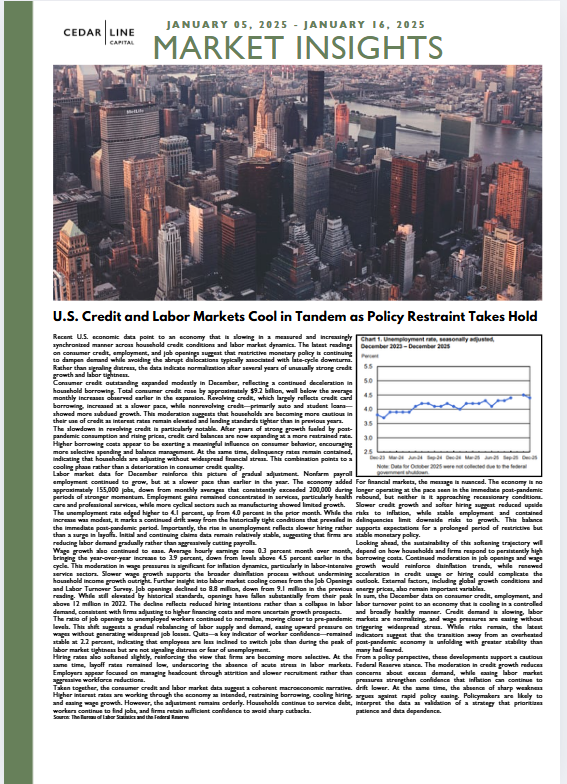
U.S. Credit and Labor Markets Cool in Tandem as Policy Restraint Takes Hold
The latest U.S. data on consumer credit, employment, and job openings point to an economy slowing in a controlled and deliberate manner. Household borrowing is moderating, labor demand is easing, and wage pressures continue to soften without signs of acute stress. Together, these developments suggest monetary tightening is restraining demand while preserving overall economic stability.